B2C App Market Weekly #1: Anticipatory AI, NFC Wands, and a $1.4T App Economy
Issue #1 of B2C App Market Weekly tracks five standout signals from the past two weeks: Google Dreambeans turns your calendar into curated daily stories, Cash App ships a $25 NFC wand to make Gen-Z payments social, Spotify launches a personal podcast creation app, Apple reports 40% of its top 100 apps now have consumer AI, and Product Hunt highlights local-first media search and health wearables.

B2C App Market Weekly — Issue #1: AI Personal Intelligence, Physical Payments, and the Scale of the App Economy
The past two weeks offered a concentrated look at where B2C consumer apps are headed: AI that reaches inside your personal data to generate stories you didn't know you needed, fintech hardware that turns payment into a social gesture, audio platforms expanding from listening into creation, and a fresh set of market numbers showing just how large the app economy has grown. Here are the five signals worth tracking this cycle.
1. Google Dreambeans: AI personal intelligence meets doomscrolling antidote
Google Labs launched Dreambeans for iOS and Android on June 3 — an app that pulls from Gmail, Calendar, Photos, YouTube, and Search History to generate 10–14 "stories" per day tailored to your upcoming life events and interests. The twist compared to standard AI summaries: it runs overnight, batching your data while you sleep, and serves a small fixed daily ration rather than an infinite feed.1
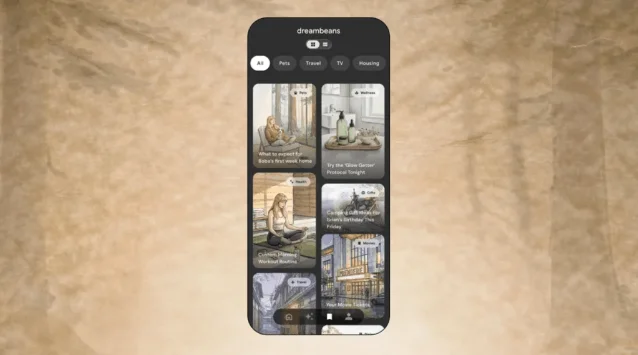
Currently restricted to U.S.-based Google AI Ultra subscribers ($100/month plan), with a public waitlist at labs.google/dreambeans. The app connects to Google data only with explicit permission, and users can delete their data or disconnect services at any time.
Builder read: The "finite daily ration" mechanic is worth examining. Several startups are currently competing for the user who is fed up with infinite scroll — a company called Bond reviewed in April uses a similar AI-memory approach. The question is whether a capped daily story count is genuinely novel or just a better marketing frame for the same AI briefing format. Either way, the pattern (AI reads your calendar and surfaces relevant suggestions before you think to ask) is repeating across multiple B2C products now.
2. Cash App Wand: making payments physical and social
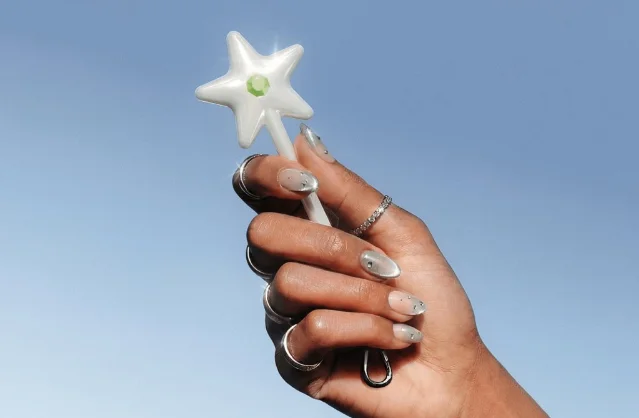
Block's Cash App launched a $25 NFC-enabled wand on June 4 — a keychain-sized accessory linked to the Cash App Card that lets users tap to pay at any Visa-compatible terminal. The wand is the first entry in a broader NFC tag hardware line; limited-edition drops and more form factors are planned before a permanent lineup arrives this summer.2
The strategic angle is explicit: "While digital wallets are invisible and physical cards are often buried in wallets, Cash App Tags are just the opposite. We see a unique opportunity here to make payments visible and social for the first time," said Thomas Templeton, Hardware lead at Block. The wand is aimed squarely at Gen Z — Cash App already extended its service to teens (13–17) in 2021, and in April 2026 added a parent-controlled debit card for children aged 6–12.2
Loading content card…
Builder read: The wand is a hardware-as-marketing-wedge play: a low-cost physical product creates social moments that drive app installs. Comparable to how Robinhood used free stock to make investing tangible, or how Bereal used fixed timing to make photo-sharing feel real. The TikTok trend of homemade payment wands proves demand was already there — Cash App is just formalizing a consumer behavior that existed. If you're building in fintech or any B2C with repeat engagement, the question is: what physical signal can make your digital product visible?
3. Studio by Spotify: personal podcast creation goes mainstream
Spotify released "Studio" — a standalone desktop app for creating personal AI-generated podcasts — on May 21, in research preview across 20+ markets for users 18 and older.3
The app connects to a user's email, calendar, and bookings to generate private audio briefings. An example prompt from the launch: "Create a daily audio brief for my road trip through Italy. Walk me through my day using my calendar and bookings. Recommend a memorable dinner spot near where I'll be. And end with a podcast recommendation I'd love for the drive." The audio saves to the user's personal Spotify library, is not publicly visible, and syncs across devices.
This format — AI-generated podcast from connected personal or source data — has been consolidating across the industry since Google's NotebookLM popularized it in 2024. Adobe (January 2026), ElevenLabs (November 2024), and apps like Hero and Huxe have all shipped variants. Spotify's move brings the format to its 640M+ user base with integration hooks that go beyond any standalone app's reach.3
Builder read: The audio-briefing format is now table stakes for any knowledge management or productivity app. Spotify's edge is distribution, not differentiation. For builders entering this space, differentiation needs to live elsewhere — the source connectors (which calendar, which data types), the voice quality, or the output editing experience. Spotify also left open a hint worth watching: Granola-style system audio capture could make the Studio app a meeting notetaker down the road.
4. App Store at $1.4 trillion: 40% of top apps now have consumer AI
Apple released its annual App Store ecosystem report on June 4, ahead of WWDC. The App Store facilitated $1.4 trillion in developer billings and sales in 2025, up from $1.3 trillion the prior year. The breakdown: $1.1 trillion in physical goods and services (retail, grocery, ride-hailing, travel), $149 billion in digital goods, and $151 billion in in-app ad revenue.4
The headline most relevant to B2C builders: 40 of the top 100 apps had consumer-facing AI capabilities in 2025, and those 40 saw stronger billing growth than the other 60. Apple also flagged that it may announce policies allowing AI agents on the App Store at WWDC, following reports in May about an upcoming AI agent app category.
The App Store saw 850 million average weekly users across 175 countries in 2025. Billings and sales have more than tripled in the U.S. and Europe over six years, and more than doubled in China.4
Builder read: The 40% AI-capability figure in the top 100 is the most actionable data point in this report. It's not that every app needs AI — it's that the apps already at the top are adding it and growing faster. For anyone building in a category where the top apps don't yet have consumer AI features, that gap is real now and won't be in 12 months.
5. Product Hunt signals: local media search and health wearables lead the week
The May 31 Product Hunt leaderboard was topped by Clipto — a Mac app offering fully local, natural-language search over terabytes of personal media (photos, videos, documents) without sending anything to a server.5 Second was Oura Ring 5, the latest iteration of the smart ring with health and sleep tracking, pitched as the world's smallest smart ring yet.6
On May 30, the top launch was Wandesk — an open-source, AI-powered desktop environment builder.7
Across both days, the pattern on the consumer side was clear: privacy-first local processing (Clipto), health hardware (Oura), and AI productivity tools that run without cloud dependency. These aren't radically new themes, but their concentration at the top of the weekly chart suggests the Product Hunt community is rewarding them more consistently now.
The week's signal pattern
| Vertical | Launch | Core mechanic | Stage |
|---|---|---|---|
| AI / Personal data | Dreambeans (Google) | Overnight personal data processing → curated daily stories | Live (US, AI Ultra) |
| Fintech / Hardware | Cash App Wand | NFC tag converts payment into a social / physical gesture | Live ($25, US) |
| Audio / Productivity | Studio by Spotify | AI-generated personal podcasts from calendar + email | Preview (20+ markets) |
| App economy | Apple App Store report | 40% of top 100 apps have consumer AI; agent apps potentially coming | Annual report |
| Health / Privacy | Oura Ring 5, Clipto | Wearable health tracking; local media search | Live |
The cross-cutting thread this cycle: AI is moving from answering questions to anticipating them — Dreambeans generates stories before you search, Studio generates podcasts before you sit down to listen, Apple's agent app category would act before you tap. For anyone building B2C today, "anticipatory AI" is the distribution advantage worth watching, not just better models.
Sources cover June 3–4, 2026 (TechCrunch) and May 30–31, 2026 (Product Hunt). Next issue covers the week of June 8.
References
- 1Google's Dreambeans, its weirdest-named AI tool to date, will turn your life into a cartoon
- 2Cash App launches a wand for tap-and-pay
- 3Spotify takes on Google's NotebookLM with its new app
- 4Apple touts $1.4 trillion in App Store billings and sales, 90% without a commission
- 5Clipto on Product Hunt
- 6Oura Ring 5 on Product Hunt
- 7Wandesk on Product Hunt
Add more perspectives or context around this Post.